#1 Surprising No Real Women, Anywhere:
Researchers at the University of Limerick, Ireland, published a study with workers in a virtual office. The test subjects were told to complete tasks with the aid of four A.I. agents: a text-based chatbot, a desk robot, and two human-like assistants named Johan and Johanna. They were then asked to rate the agents’ work, and to allocate real money to each agent for their work. Participants consistently rated Johan and Johanna higher than the chatbot or robot, and paid the human-like agents more. “Having Johanna next to me made me more prone to credit her more again because I felt there was a person, a colleague sitting next to me that I had a conversation with and that was giving me her own input,” one participant said. The difference in ranked ability between Johan and Johanna is statistically insignificant, but the subjects paid Johan, the male agent, 10 percent more on average than Johanna, the female agent. (MS/Euronews) ...They’re actually doing better than real humans.
 #2 Just Like Real Men:
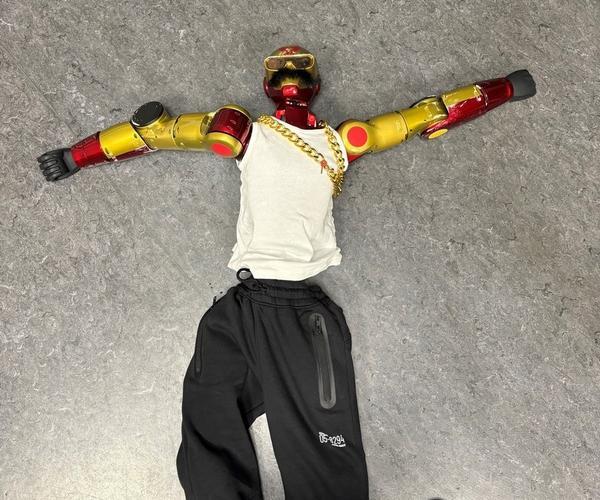
Cologne, Germany, police are investigating an alleged harassment incident after a 16-year-old girl was inappropriately touched. The suspect: a 120-centimeter (3 foot, 11 inch) tall robot. An Internet video shows two males, aged 16 and 19, accompanying the robot near a fast-food restaurant when it made the contact, then made thrusting movements toward the alleged victim. Police responded and found the robot in a vehicle’s trunk. Police shared an image of the red and gold bot, sporting a fake mustache and wearing a large gold chain. The teens haven’t been charged, but are considered suspects while investigators decide if the robot’s actions were preprogrammed, or happened in real time. “We have not been aware of this phenomenon so far,” police spokesman Christoph Bermel said, adding that it’s “new territory for us.” (MS/AP) ...It’s exactly as funny when a robot does it as when a human does.
Since 1994, this is the 1688th issue of Randy Cassingham’s...

18 October 2026: Craig is Innocent | Copyright ©2026 https://thisistrue.com |


